
How does hyperbaric therapy work?
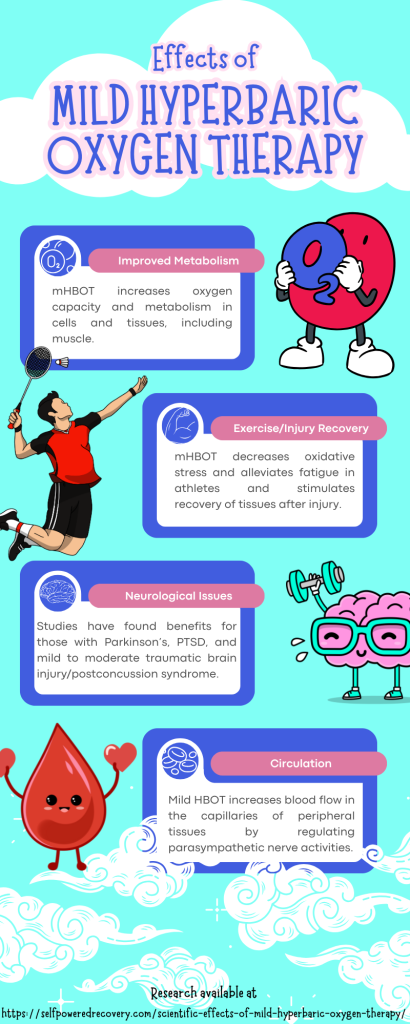
Hyperbaric oxygen therapy is breathing greater-than-air oxygen (21%) at greater than 1 atmosphere of pressure. This does two things: 1) increasing the amount of oxygen in red blood cells, and 2) enhancing dissolution of oxygen in blood.
This oxygen infusion has an anti-inflammatory effect on the immune system owing to its triggering production of antioxidant enzymes, which stay elevated for a minimum of 48 hours after a session. Over a course of treatment, this process builds into a long-term anti-inflammatory state that can reduce inflammatory disease intensity.
HBOT’s circulation-enhancing effects also potentially make it useful in stimulating healing of stubborn wounds; enhancing circulation in the brain appears to render it a useful approach in reducing activity of conditions including Parkinson’s, PTSD, and mTBI.
Finally, some research suggests HBOT may assist in killing anaerobic pathogens; it has been used by some with Lyme disease, for example.
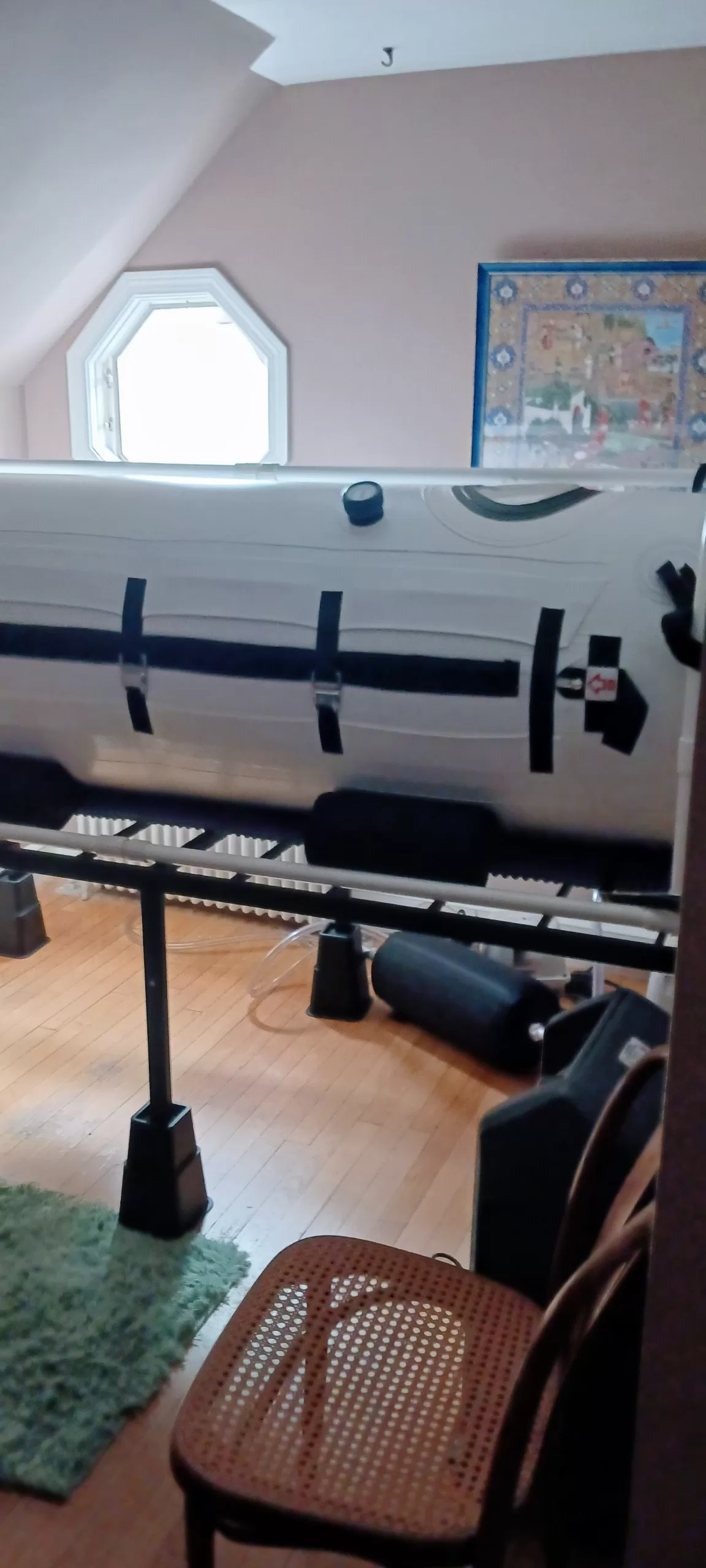
Our soft-shell chamber pressurizes to 1.3 atmospheres. This is known as Mild Hyperbaric Oxygen Therapy (mHBOT). It pressurizes using normal room air; once in the chamber, you’ll breathe pure oxygen via a mask.
What are the possible benefits?
- Enhancing circulation
- Assisting tissue healing
- Improving exercise recovery
- Reduction of fatigue
- Boosting metabolism
- Ameliorating cognitive issues
Learn more about the science behind mHBOT’s potential benefits here.
Some conditions that mHBOT has been used for include:
- Autoimmune disease
- Autonomic Dysregulation
- Burns/Wound Healing
- Chronic Fatigue Syndrome and Fibromyalgia
- CIRS (Chronic Inflammatory Response Syndrome)
- Concussion/mild Traumatic Brain Injury
- Crohn’s/IBS
- Depression
- Headaches
- Long Covid
- Lyme
- Migraines
- Multiple Sclerosis
- Musculoskeletal injury
- Neuropathy/Nerve Injury
- Pain
- Post concussion syndrome
- Post-surgical healing
- Sports Injury/Athletic Recovery
A treatment course typically lasts from 1-3 months. It’s a good idea to try at least one session to see how it impacts you before committing to a full course.
You may opt to add PEMF and/or photobiomodulation to your hyperbaric oxygen session for no additional charge.
Contraindications
Please note the following conditions may prevent you from using mild hyperbaric oxygen therapy:
- Untreated tension pneumothorax
- Severe respiratory disease (COPD/Emphysema with air trapping)
- Certain types of lung disease
- Upper Respiratory Infections
- Pacemakers or epidural pain pumps
You should also avoid HBOT if you’re taking any of these medications:
- Disulfiram
- Doxorubicin (Adriamycin®)
- Mafenide Acetate (Sulfamylon®)
You can find a more detailed discussion of HBOT contraindications here.